
Head roasters and executive chefs
Experienced culinary leaders responsible for the complete roast duck process and final service quality.
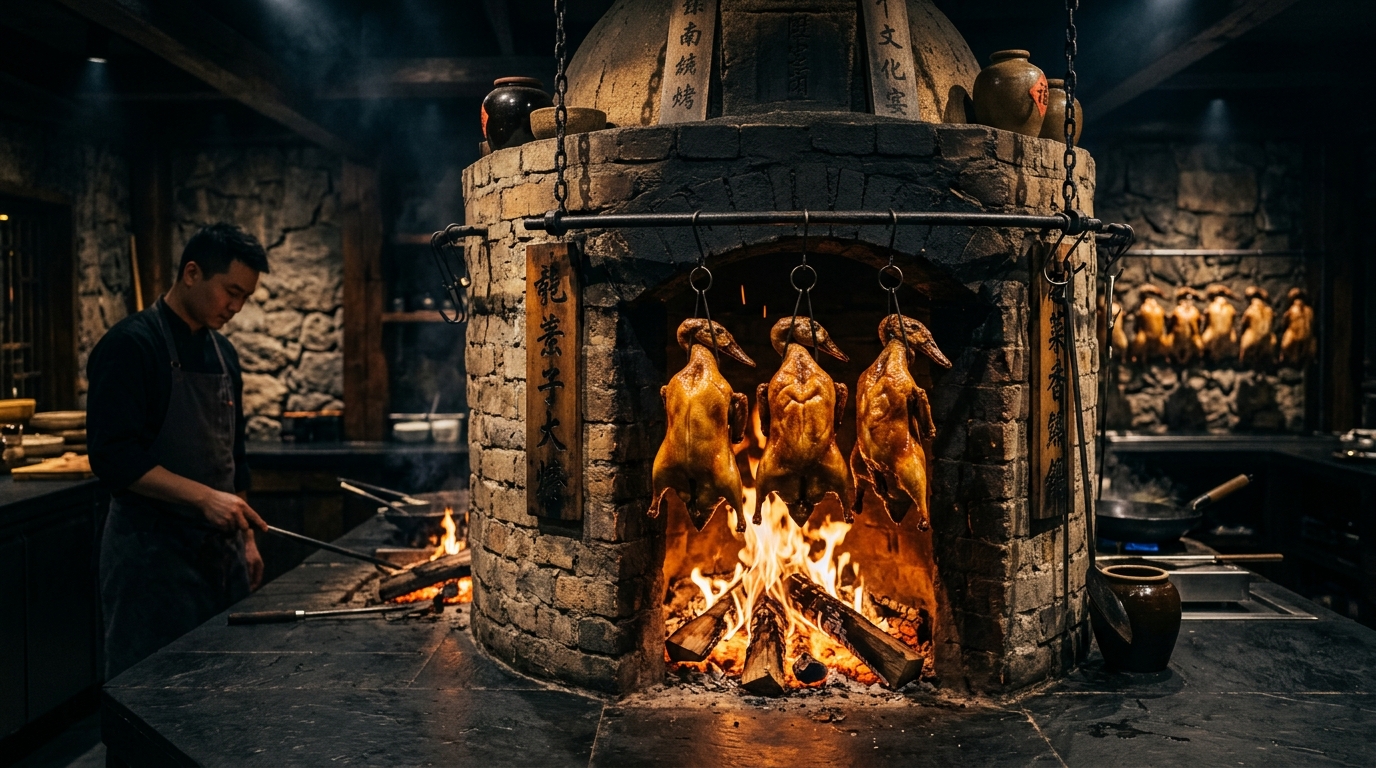
An assessment-led path for chefs and operators who need evidence of technical control—not simply a training attendance record.
Training introduces the method. Certification asks a different question: can the candidate control the complete process and produce a service-ready roast duck with discipline and consistency?
The pathway is designed around Master Liu’s new-style hanging-oven method and can be scoped for qualified chefs, core kitchen team members, and restaurant implementation projects.
Certification is most useful when a person or operation needs a clear technical standard that can support training, accountability, and quality control.
Experienced culinary leaders responsible for the complete roast duck process and final service quality.
Specialists whose preparation, roasting, or carving role directly affects repeatability.
Operators introducing Master Liu’s method and needing an objective review before launch or expansion.
Groups working to align technique, SOP discipline, and output expectations across teams.
Strong roast duck does not come from one dramatic moment at the oven. The result depends on a chain of controlled decisions from preparation through tableside service.
Preparation sequence, skin separation, structural handling, and a form that supports even drying and roasting.
Observe: control, care, repeatabilityTemperature awareness, skin tension, handling discipline, and readiness for the glaze-and-dry stage.
Observe: skin condition and consistencyApplication balance, environmental control, time discipline, and the surface condition required for crisp color and texture.
Observe: coverage, timing, readinessOven management, hanging position, heat response, smoke character, and adjustment during the roast.
Observe: judgment under changing conditionsA finished duck that balances crisp skin, tender meat, clean aroma, controlled fat, and practical service yield.
Observe: final-product controlKnife control, slice structure, presentation, pace, and coordination with the guest-facing service sequence.
Observe: precision and confidenceThe exact assessment format is confirmed for each candidate or project. Certification is awarded after training, evaluation, and output review—not automatically after course completion.
The engagement is structured around the candidate’s role, current capability, kitchen conditions, and commercial objective.
We begin with the chef’s experience, team responsibilities, kitchen setup, equipment, location, and intended use of the credential.
The candidate works from the relevant training sequence, SOP expectations, and quality checkpoints within Master Liu’s method.
Key preparation, glazing, roasting, output, and carving capabilities are reviewed in the agreed assessment format.
The result is examined as a complete product, with technical gaps identified before a certification decision is made.
Candidates who demonstrate the required standard can receive certification; others receive a clear direction for further training and review.
Awarded following training, practical evaluation, and review of service-ready output.
The purpose is not decorative paperwork. Certification should give chefs and operators a shared language for technical expectations, coaching, and ongoing quality control.
Scope, location, assessment format, timing, and follow-up are confirmed during consultation because international kitchens and operating conditions vary.
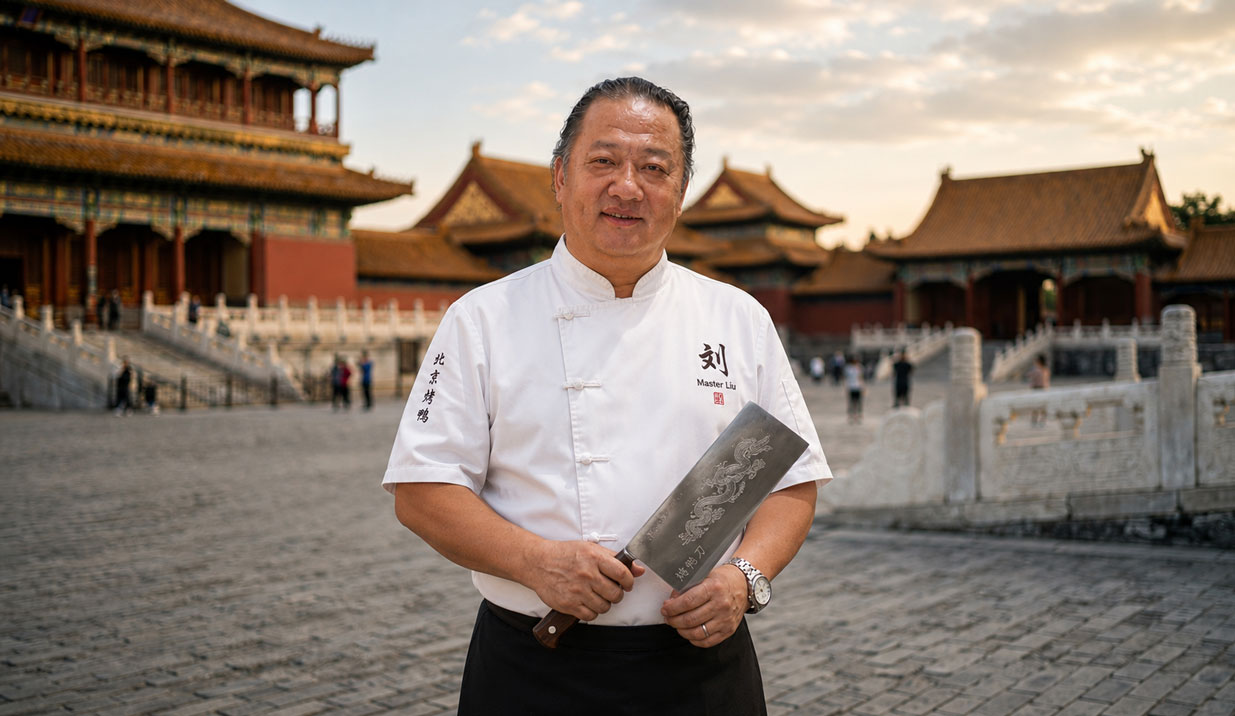
Master Liu Enlai is the technical founder of Imperial Duck King, a sixth-generation heir to the imperial roast duck tradition, and a pioneer of Beijing’s new-style hanging-oven roast duck method.
His approach connects heritage with repeatable kitchen systems: preparation standards, glaze science, drying discipline, oven control, carving protocol, and chef evaluation.
Meet Master Liu →These answers explain the role of certification and how an international assessment is scoped.
Training is designed to build capability. Certification evaluates whether the candidate can demonstrate the relevant technical standard and control the finished output. Attendance alone does not guarantee certification.
Yes. Certification can be structured for international operators after training, evaluation, and output review. The format is confirmed after the location, kitchen, equipment, and candidate role are reviewed.
The pathway is intended for head roasters, chefs, core kitchen team members, and operators implementing Master Liu’s system. Candidate readiness is reviewed before an assessment is scheduled.
Complete mastery takes time. The preparation and assessment timeline depends on current capability, the relevant modules, kitchen conditions, and the commercial objective.
Certification is not treated as automatic. Where capability gaps remain, the next step is additional training, correction, and a later output review.
Tell us about the candidate’s role, experience, location, equipment, current roast duck process, and why certification matters to your operation.