
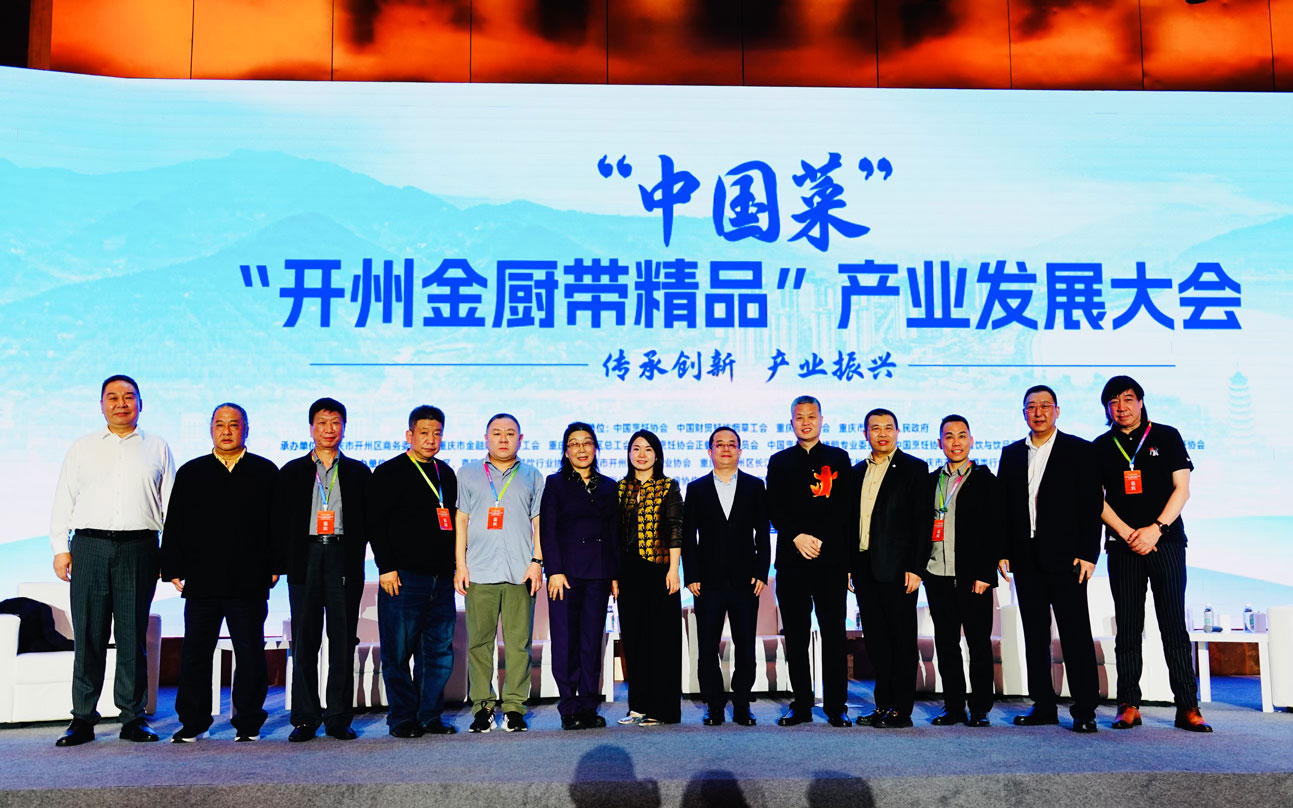
Master Liu recently appeared at the “Chinese Cuisine” Kaizhou Golden Chefs Bring Premium Products Industry Development Conference, an industry event focused on heritage, innovation, and revitalization.
The conference centered on the theme of heritage, innovation, and industrial revitalization, bringing together industry figures to discuss higher-quality development in Chinese cuisine, premium product building, and stronger coordination across the culinary sector. As the technical founder of the Imperial Duck King roast duck system and a sixth-generation heir to imperial roast duck, Master Liu’s appearance added a clear craftsmanship and industry-practice dimension to the event.
From the conference activities, Master Liu appeared alongside other invited guests on a stage explicitly framed around Chinese cuisine and premium development. That context matters. It places him inside a broader conversation about where Chinese cuisine is heading, rather than inside a purely ceremonial appearance.
The title of the conference itself points toward two parallel tasks for the sector: preserving culinary identity while also translating that identity into premium products that can compete in a modern market. That is one reason Master Liu’s presence carries weight. His work has long operated in exactly that space between traditional technique and contemporary product expression.
Within the industry, Master Liu is known not only as a roast duck master but as a practitioner who has continued to push standardization, consistency, and adaptation to higher-end dining contexts. In that sense, his value goes beyond simply executing a classic dish well. It lies in helping traditional Chinese cuisine become more refined, more legible to today’s diners, and more durable in commercial settings.
The conference’s emphasis on heritage, innovation, and industrial revitalization closely aligns with the path Master Liu has followed for years. Meaningful innovation in Chinese cuisine does not come from abandoning roots. It comes from preserving technical identity while improving standards, results, and modern relevance so that premium dishes can keep moving forward in the market.
Seen from that perspective, Master Liu’s appearance at the conference also reflects the kind of professional role Chinese cuisine increasingly needs: someone who understands tradition, but also understands branding, market communication, and industrial collaboration. Whether the question is premium dish development, chef training, or Chinese cuisine brand building, the sector depends on more figures who combine technical depth with broader industry understanding.
This appearance at the “Chinese Cuisine” Kaizhou Golden Chefs Bring Premium Products Industry Development Conference further reinforces Master Liu’s public profile in that category. He is presented not only as a bearer of traditional craft, but also as a practitioner in the premiumization, standard expression, and long-term development of Chinese cuisine.