
A Beijing specialty in a different regional market
Peking Duck carries a strong technical and cultural association with Beijing. That identity is an asset, but it also creates an implementation question when the dish enters another regional market. Reproducing the familiar Beijing service format exactly may preserve recognition, yet it does not automatically create a meaningful connection with diners whose taste memories, ingredients, and dining customs come from somewhere else.
The Jiaxing setting includes large hospitality and banquet-oriented restaurant operations serving conferences, private dining, and group dining. In these environments, a signature dish must work across kitchen production, service timing, visual presentation, and the expectations of local guests. The challenge was therefore not to reinvent Peking Duck, but to determine where adaptation could add relevance without weakening the dish’s technical identity.
The project question became precise: how can a restaurant preserve the disciplined cooking foundation of Peking Duck while allowing the flavor experience to feel rooted in Jiangnan culinary culture?
Separate the technical foundation from the guest-facing expression
Master Liu’s approach distinguishes between the cooking system and the way the finished dish meets the diner. The core roast duck principles remain the foundation. Technical guidance focuses on process control, repeatable execution, operating standards, and the practical coordination required to move a duck from preparation through roasting and service.
Operational implementation then turns those principles into team capability. Chefs and related staff need more than a demonstration: they need clear responsibilities, a workable production sequence, quality checkpoints, and training that can survive normal restaurant pressures. Serving-format development connects the kitchen result to banquet, private-room, and group-dining service.
Localization happens primarily at the consumer-experience layer. Sauces, accompaniments, flavor balance, presentation, and cultural storytelling can evolve around regional ingredients. This distinction protects the integrity of the roast duck method while giving the restaurant room to create a relevant local expression.
Pinghu fermented duck egg becomes a modern roast duck sauce
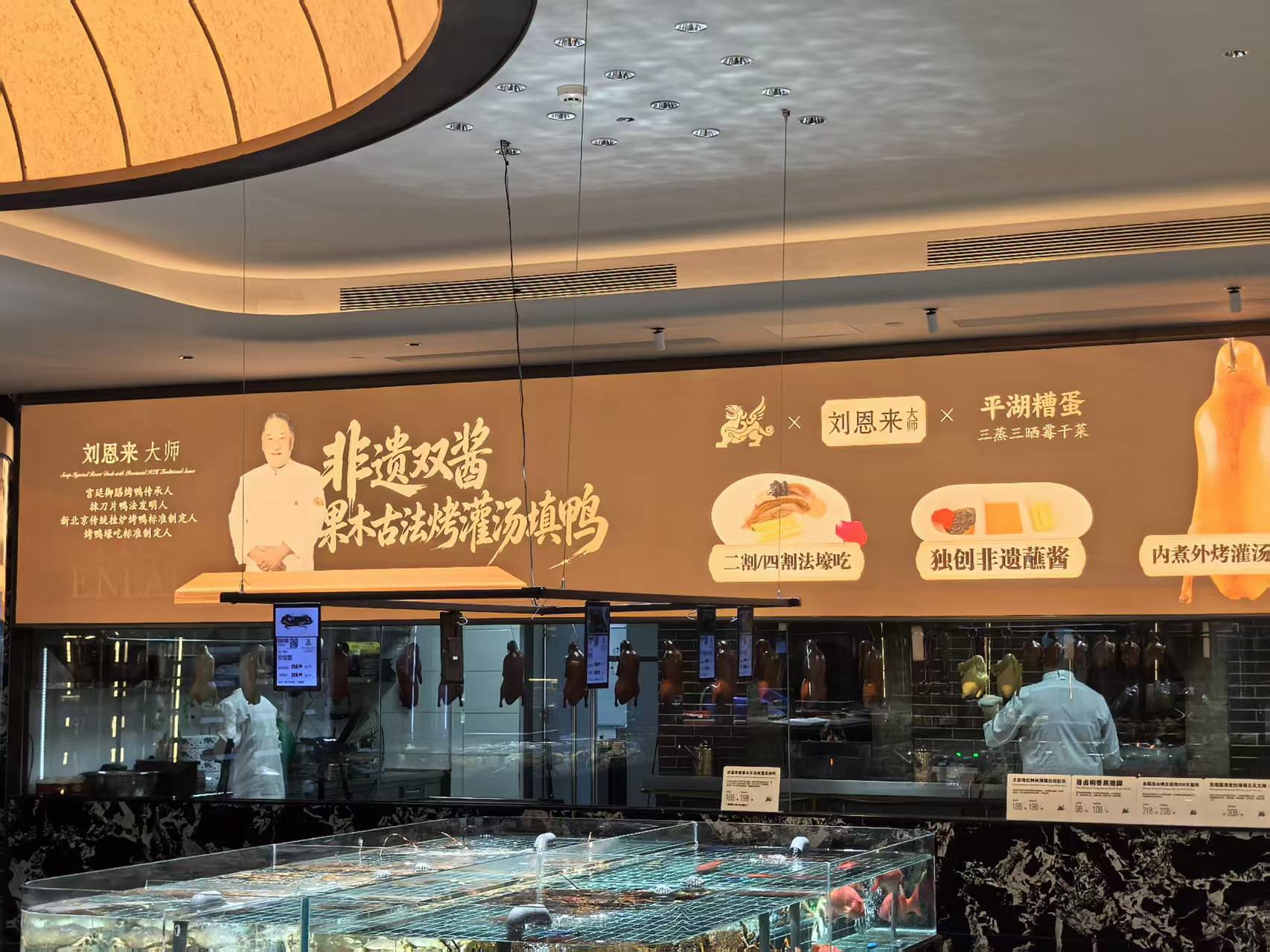
Pinghu, near Jiaxing, is associated with a traditional fermented egg specialty commonly known as Pinghu zaodan. Duck eggs are developed with fermentation ingredients linked to rice and wine-making traditions, producing a character that is markedly different from a fresh or simply cured egg. For an international audience, its relevance lies in its fermentation-derived depth, layered savory flavor, and strong regional culinary identity.
For the Jiaxing project, the fermented duck egg was combined with fermented rice-based ingredients and further processed into a sauce suitable for Peking Duck. The formulation work had to translate a traditional local food into a condiment that could sit naturally beside roasted skin, meat, and rendered richness rather than behave as an unrelated novelty.
The product logic is unusually coherent. Duck egg creates a conceptual link to roast duck itself. Fermentation contributes depth and complexity. Pinghu gives the sauce a recognizable geographic identity. At the same time, transforming the ingredient into a service-ready condiment allows a traditional food to function within a modern restaurant presentation.
Three-Steamed, Three-Dried Preserved Mustard Greens
The second condiment draws from a Jiangnan preserved mustard greens preparation associated with repeated steaming and drying. Rather than relying on the Chinese name alone, the project describes the ingredient through its process: Three-Steamed, Three-Dried Preserved Mustard Greens. That process develops a darker color, mild sweetness, savory concentration, and a complex preserved aroma.
Master Liu’s product-development work converted that flavor source into a sauce designed specifically for roast duck. The objective was balance: enough savory depth to meet the duck’s richness, enough sweetness to remain approachable, and a texture and intensity appropriate for controlled dipping. The condiment retains a connection to its traditional ingredient while operating as a contemporary restaurant product.
Together, the fermented egg sauce and preserved mustard greens sauce are presented as a Heritage-Inspired Duo, also described in the restaurant context as Two Heritage Sauces. The name explains the culinary relationship without making an unsupported claim about UNESCO or any particular institutional designation.
Build a local flavor language, not a substitute
The purpose of the two sauces was not simply to remove scallions or replace traditional sweet bean sauce. A one-for-one substitution would treat localization as an accessory decision. The larger goal was to build a recognizable local flavor language around the complete roast duck experience.
That language can be expressed as a simple culinary formula: Peking Duck Technique × Regional Ingredients × Local Dining Culture. The technical method gives the product its identity and discipline. The ingredients connect it to place. The dining culture determines how the story, accompaniments, and presentation become legible to the guest.
Master Liu’s development philosophy can therefore be summarized editorially: the core technique should remain disciplined and consistent, while the way the dish meets the diner can evolve with local ingredients and culinary culture. This is not a claim that local cooking techniques replaced Peking Duck technique. It is a clear division between technical continuity and experience-level adaptation.
Implementation requires more than a recipe
A successful roast duck program is a restaurant system. Technical standards define the target. Chef and staff training develop the people responsible for reaching it. Kitchen workflow determines whether those standards can be maintained under operating pressure. Serving experience and restaurant presentation shape how guests understand the product. Condiment design and localization give the dish a market-specific point of connection.
The Jiaxing work demonstrates how these parts can be managed as one consulting engagement. Master Liu’s role spans technical guidance, operational implementation, staff development, serving-format decisions, and regional product development. That breadth matters to restaurant owners and hospitality groups because a recipe transfer alone does not resolve training, workflow, consistency, or guest-positioning questions.
The practical value of the system is not a guarantee of commercial performance. It is a more complete implementation method: protect the technical core, build team capability around it, and deliberately design the local dining experience rather than leaving adaptation to chance.
- Technical standards and roast duck execution
- Chef training and staff role clarity
- Kitchen workflow and service coordination
- Serving experience and restaurant presentation
- Condiment design and regional localization
A repeatable methodology for other markets
The Jiaxing case offers a methodology that can potentially be applied in other regional and international markets without assuming that every market needs the same flavor solution. Pinghu fermented egg and preserved mustard greens make sense because they belong to the Jiaxing and Jiangnan context. A different location would require its own cultural and culinary research.
The transferable element is the sequence of decisions. Preserve the non-negotiable roast duck standards first. Study how local guests dine and what they recognize. Identify ingredients with genuine cultural meaning rather than superficial novelty. Develop compatible sauces and accompaniments, train the restaurant team, and test the complete experience under real operating conditions.
For international restaurant owners, chefs, investors, and hospitality groups, this approach provides a useful way to think about culinary expansion. Authenticity and localization do not have to be opposing choices when the technical foundation and the guest-facing experience are handled as distinct but connected design problems.
A roast duck concept can maintain its technical identity while developing a local culinary identity.
Key TakeawaySix steps from technical standard to local experience
The specific ingredients will change by market. The implementation logic remains consistent.
1. Preserve standards
Define the core roast duck process and the execution points that should not be diluted.
2. Study dining habits
Understand service formats, guest expectations, and the role the dish should play in the local restaurant.
3. Identify ingredients
Select locally meaningful ingredients with flavor characteristics compatible with roast duck.
4. Develop pairings
Turn those ingredients into sauces or accompaniments designed for the finished duck.
5. Train the team
Transfer technical standards, workflow, service responsibilities, and product knowledge to staff.
6. Test and refine
Evaluate execution and the full dining experience in real restaurant conditions.