
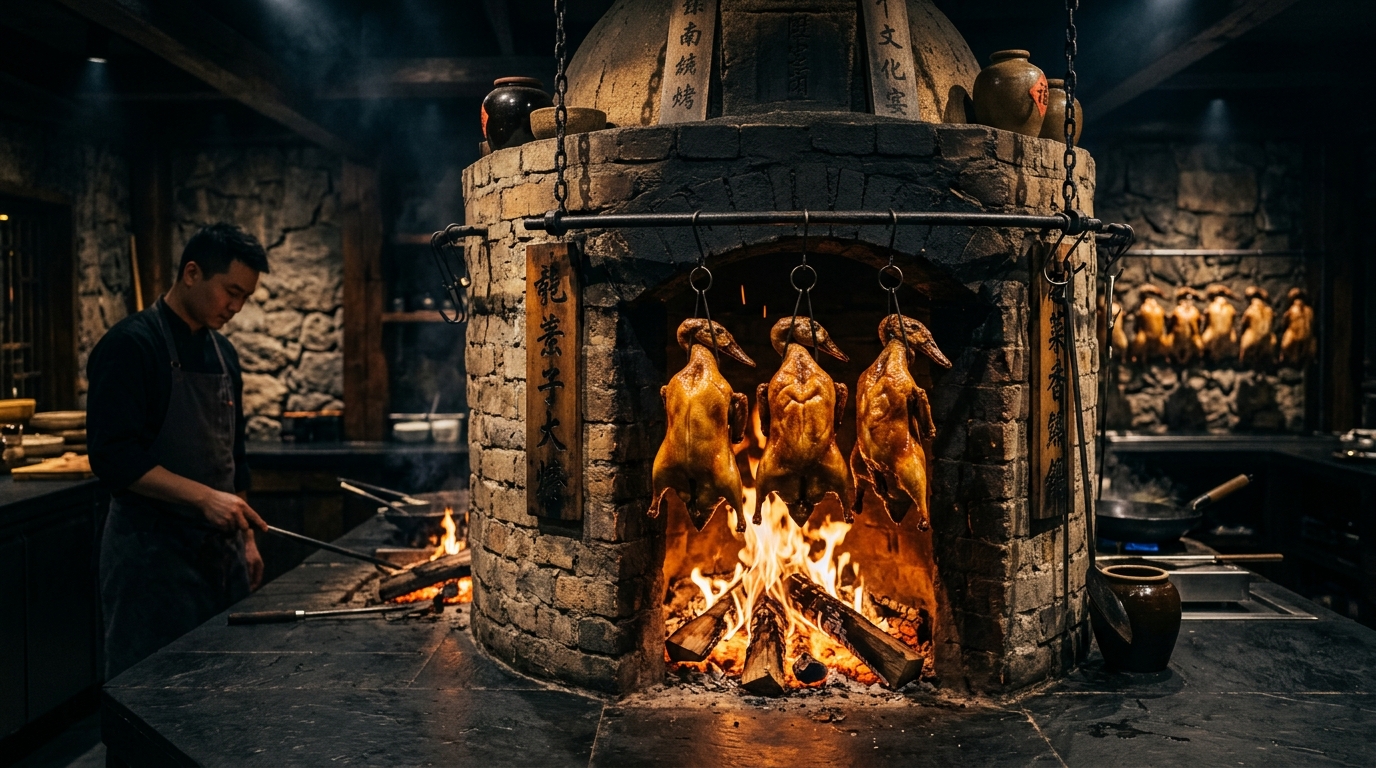
Master Liu’s roast duck method has entered active implementation in Jiaxing, Zhejiang. Across the Jiayuan and Suncity dining projects, the work now covers roasting guidance, operating standards, chef and staff training, and the development of locally inspired dipping sauces.
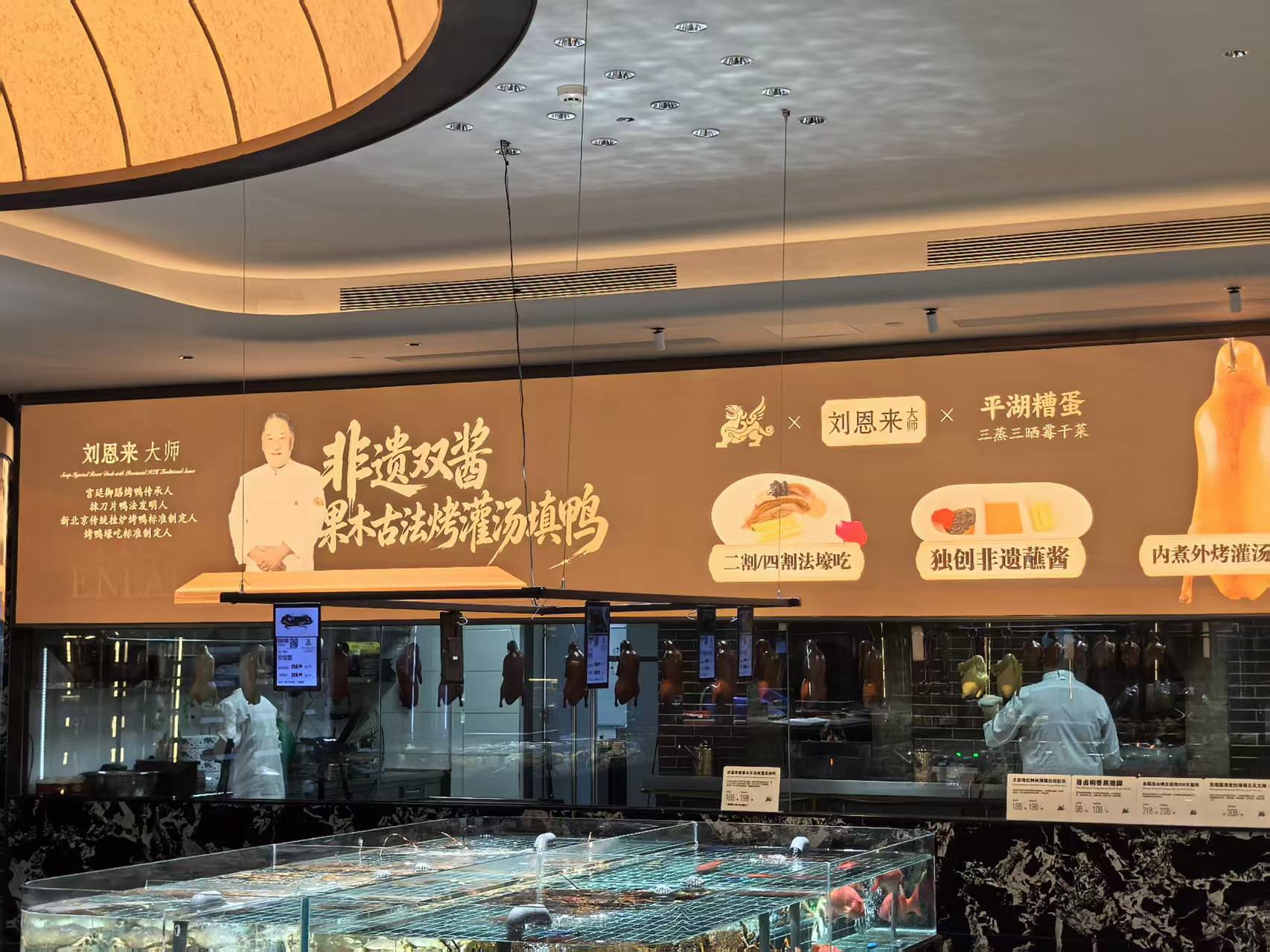
This is more than a brand partnership. Master Liu’s team is working inside the operating environment, guiding the roast duck process, defining key standards, coordinating roles, and training the people responsible for repeatable service. Project material also shows an open roast duck preparation area, placing the craft inside a real restaurant workflow.
Jiayuan includes large conference, banquet, private-room, roast duck, teppanyaki, and café dining settings. Suncity likewise relies on conference, banquet, and private-room service. These formats create practical requirements for timing, presentation, and team coordination, so the rollout must connect roasting technique with standards the kitchen can execute.
A central product innovation is a pair of sauces referred to as the “two heritage-inspired sauces.” They are not simply substitutes for sweet bean sauce. Their purpose is to connect Beijing roast duck technique, traditional Jiangnan ingredients, and local dining culture.
The first sauce is inspired by Pinghu fermented egg, a traditional Jiaxing-area food made with duck egg, fermented rice mash, glutinous rice, and related fermentation methods. It is reprocessed and balanced with fermented rice and glutinous rice to suit roast duck. The duck-egg base creates a natural connection to the dish, while fermentation develops layered aromas with a clear local identity.
The second sauce uses traditional three-steamed, three-sun-dried preserved mustard greens as its main flavor source. Darker in color, gently sweet, and marked by complex fermented aromas, it is further processed and seasoned into a contemporary sauce that meets the richness and roasted notes of the duck.
The thinking behind the sauces can be summarized as: preserve the technique, let the flavor speak locally. Beijing roast duck’s core roasting method remains stable and is passed on through training. When that method enters a new region, however, the diner-facing flavor can draw on representative ingredients and local habits.
Localization in Jiaxing therefore does not alter the core roasting craft. It works through sauce, pairing, and the dining experience, giving local diners a familiar cultural point of entry while retaining the identity of Beijing roast duck.
The project also shows how one dish becomes a technical-output system. Roast duck guidance and operating standards, professional staff training, and region-specific product development reinforce one another, turning a master’s experience into a product a restaurant team can execute in daily service.
As on-site guidance, training, and sauce development continue, the Jiayuan and Suncity projects are testing this approach in real dining settings. Jiaxing is another practical step in Master Liu’s continuing exploration of regional development for roast duck.